Overview

Quantum-enhanced communication
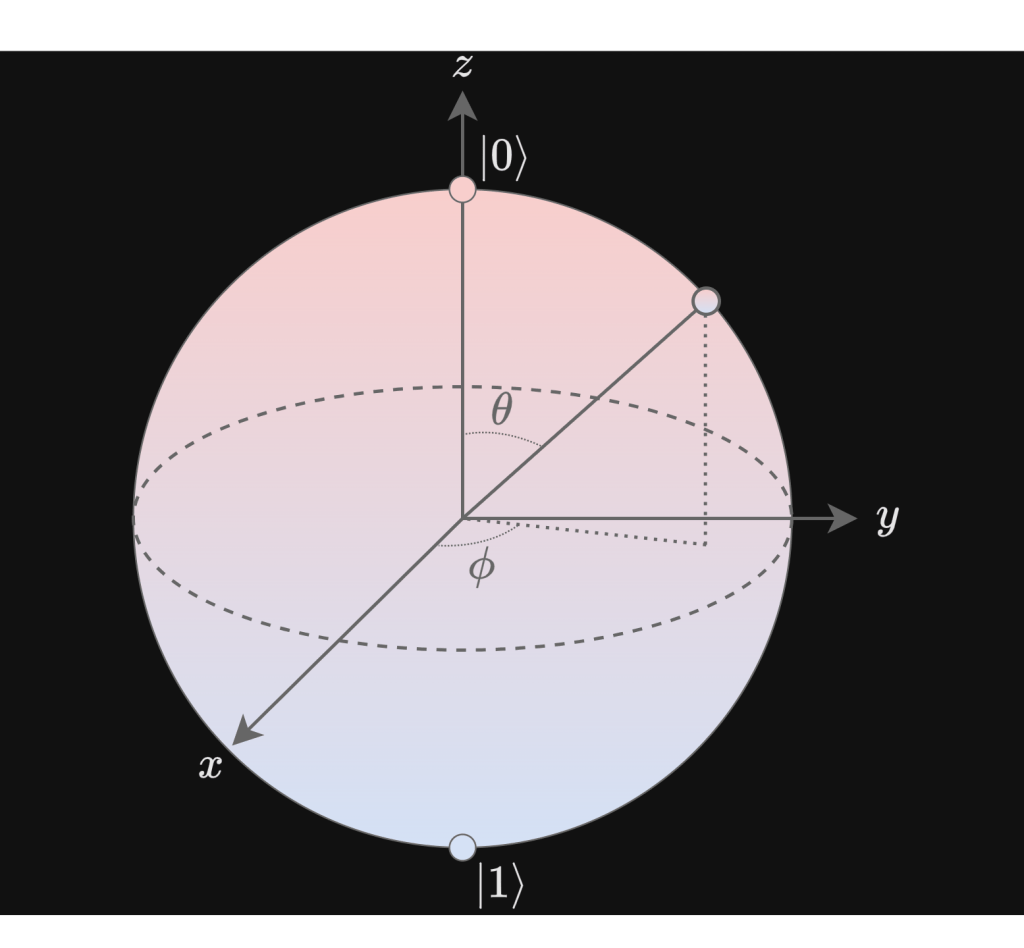
First proposed by Paul Benioff in 1981, quantum computing introduces a new computing paradigm. Quantum bits (qubits) enable quantum parallelism, allowing simultaneous probing of possibilities. Quantum algorithms offer significant speedup for some computational problems. My current research focuses on utilizing quantum algorithms to enhance the performance of wireless communication systems. [Further Reading]
Quantum-secured communication

The expected arrival of quantum computing presents a security risk to communication networks. To address this threat, researchers have developed quantum key distribution (QKD) systems. QKD uses quantum mechanics to establish symmetric keys between authenticated parties, ensuring unconditional security. In my Master’s, I experimentally implemented a prototype for a continuous-variable QKD (CV-QKD) system. [Further Reading]
Materials informatics
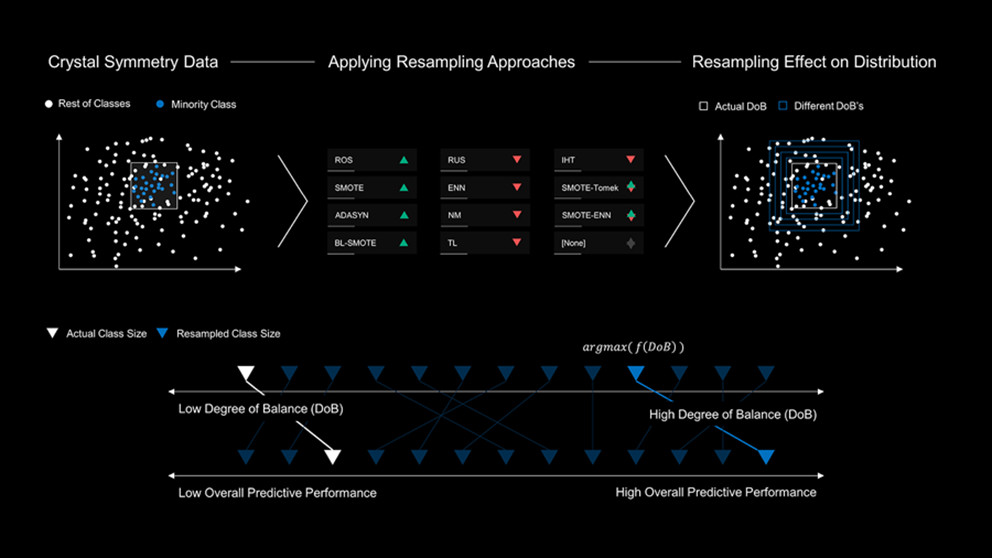
Materials informatics combines materials science and data science to accelerate materials discovery, properties estimation, and development. The traditional approach for materials innovation is serendipitous, relying on brute force search to screen for novel materials, either experimentally or computationally. On the other hand, materials informatics infers the underlying behavior of materials by utilizing machine learning (ML) techniques.
Publications
- A. Alsaui et al., “Quantum partial sorting for signal decoding in wireless communication systems,” IEEE J. Sel. Areas Commun., Jun. 2026.
- A. Alsaui et al., “Quantum radar for ISAC: Sum-rate optimization,” IEEE Trans. Commun., vol. 74, pp. 7329–7341, Apr. 2026.
- A. Alsaui et al., “Physics-informed neural networks for quantum Internet modeling: Concepts, implementation, and future directions,” IEEE Commun. Mag., vol. 64, no. 1, pp. 237–242, Jan. 2026.
- A. Alsaui et al., “Quantum partial sorting for efficient signal decoding in spatially modulated wireless systems,” in Proc. IEEE 26th Int. Workshop Signal Process. Adv. Wireless Commun. (SPAWC), 2025, pp. 1–5. (Invited Paper)
- A. Alsaui et al., “When are quantum algorithms applicable for signal decoding in wireless communication?” IEEE Open J. Commun. Soc., vol. 5, no. 1, pp. 6314–6328, Sep. 2024. (Most Popular Paper, IEEE Xplore, Oct. 2024)
- A. Alsaui et al., “Machine learning and time-series decomposition for phase extraction and symbol classification in CV-QKD”, Phys. Scr., vol. 99, no. 7, p. 076 008, Jun. 2024
- A. Alsaui et al., “Digital filter design for experimental continuous-variable quantum key distribution,” in Proc. IEEE Opt. Fiber Commun. Conf. Exhib. (OFC), San Diego, CA, USA, 2023, pp. 1–3.
- Y. Alwehaibi et al., “Experimental characterization of a simple entanglement distribution link,” in Proc. Optica Quantum 2.0 Conf. Exhib., Optica Publishing Group, 2023, QTu3A.40.
- A. Alsaui. Coherent Optical Communication Techniques for Experimental Continuous-Variable Quantum Key Distribution. Diss. Indian Institute of Technology Madras, 2023.
- Y. Alghofaili et al., “Accelerating materials discovery through machine learning: Predicting crystallographic symmetry groups,” J. Phys. Chem. C, vol. 127, no. 33, pp. 16 645–16 653, Aug. 2023.
- M. Alsalman et al., “Outliers in Shannon’s effective ionic radii table and the table extension by machine learning,” Comput. Mater. Sci., vol. 228, p. 112350, Sep. 2023.
- A. Alsaui et al., “Resampling techniques for materials informatics: Limitations in crystal point groups classification,” J. Chem. Inf. Model., vol. 62, no. 15, pp. 3514–3523, Jul. 2022.
- A. Alsaui et al., “Highly accurate machine learning prediction of crystal point groups for ternary materials from chemical formula,” Sci. Rep., vol. 12, no. 1, pp. 1–10, Jan. 2022.
- S. Amara et al., “Spin-orbit torque driven multi-state device for memory applications,” in Proc. IEEE Electron Devices Technol. Manuf. Conf. (EDTM), 2019, pp. 371–373.
 Abdulmohsen Alsaui